
Starting and scaling a business is notoriously difficult, with the margin for error razor-thin in the early years. Entrepreneurs constantly look for the right product-market fit, funding, and talent to keep the lights on. Yet, one of the strongest indicators of long-term survival isn't just what you know—it is who is guiding you.
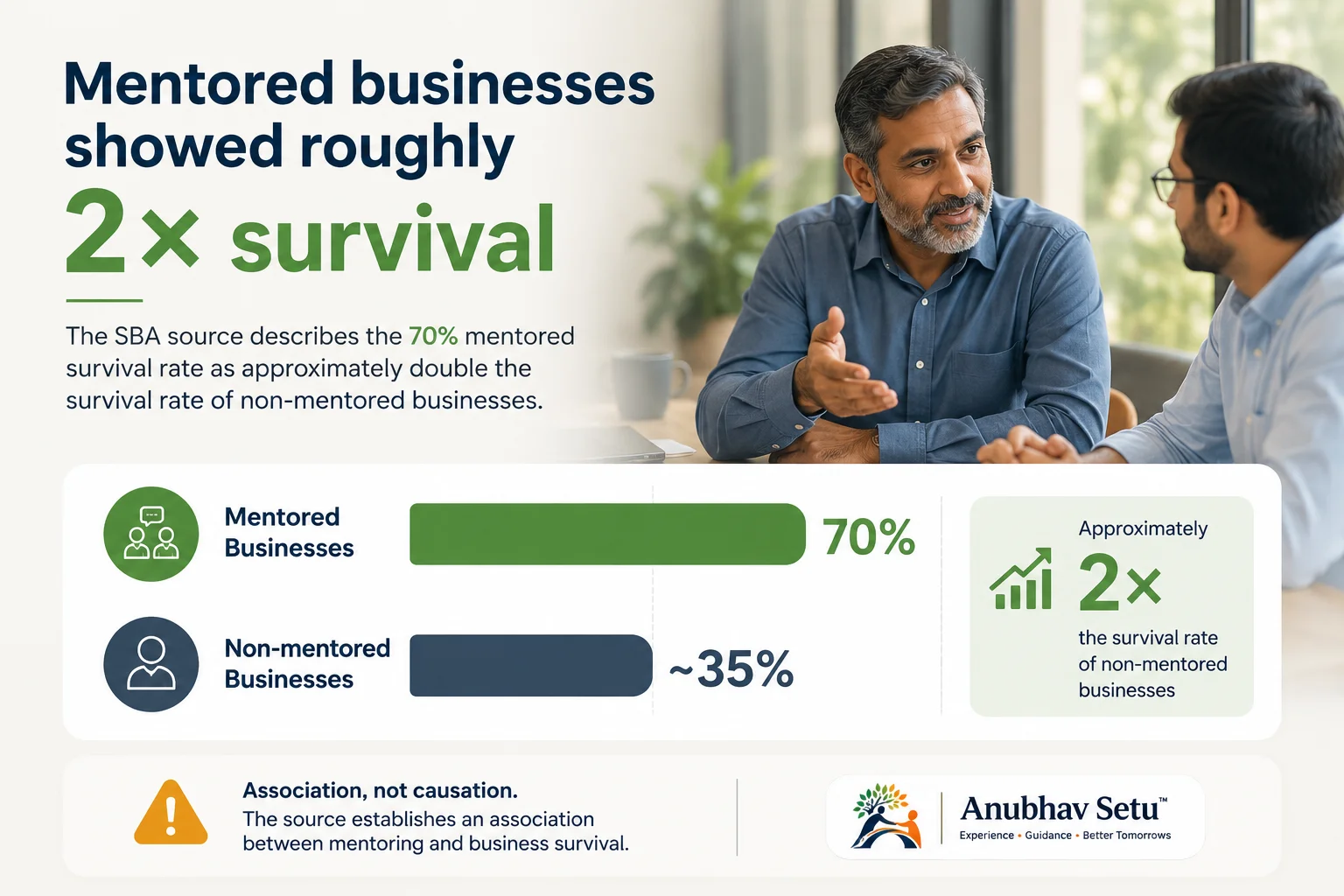
According to data from the Small Business Administration (SBA), there is a staggering contrast in the survival rates of businesses based on whether their founders received mentorship.
The Survival Association:
Mentored Businesses → 70% Non-Mentored Businesses → ~35%
To be clear, data does not suggest that signing up for a mentor is a magic switch that directly causes a business to succeed. Instead, the data reveals a powerful association: founders who actively seek and maintain mentorship are roughly twice as likely to survive the grueling early stages of business ownership.
Why does this strong correlation exist? The benefits of being a mentee extend far beyond simple business advice, impacting every facet of a founder's journey.
1. Illuminating the Blind Spots
When you are in the trenches of building a business, your perspective narrows. A mentor acts as an elevated vantage point. Having navigated similar challenges, they can spot operational pitfalls, cash flow crunches, and market shifts long before they become existential threats to a first-time founder.
2. A Sounding Board for High-Stakes Decisions
Entrepreneurs suffer from decision fatigue. Whether it is pricing a new service, managing family business succession, or knowing when to pivot, having a "second, wiser opinion" changes the dynamic. Mentors don't make the decisions for you; they help you uncover the hidden trade-offs, stripping away the emotional noise so you can make choices with clarity and confidence.
3. Emotional Resilience in a Lonely Game
Leadership can be incredibly isolating. Behind the polished updates and revenue milestones, founders often wrestle with burnout, imposter syndrome, and the pressure of keeping a team employed. A mentor offers a confidential, judgment-free zone. Having an experienced listener who has "been there" provides psychological safety, allowing mentees to process stress and bounce back from failures faster.
4. Expanding the Realm of the Possible
A seasoned mentor brings decades of industry credibility, relationships, and network access. While a mentor is not a broker, their guidance often helps mentees refine their pitch, approach the right stakeholders, and recognize partnerships they might have otherwise overlooked.
The Takeaway
Decades of hard-earned professional experience, mistakes, and judgment shouldn't just retire when a career ends. For the generation coming up behind them, that experience is a lifeline.
Mentorship is not a substitute for a solid business model or hard work, but the data is hard to ignore. If you are building something new, don't do it in a vacuum. Seek out perspective. If you have already navigated the fire, consider offering your time to someone who is just starting out.
Who is the mentor that changed the trajectory of your career? Bharat Pandya Ashok Bhanderi Sunil Madathil Jignesh Thummar Vimal Goradiya
#AnubhavSetu #ExperienceThatGuides #ExperienceMatters #Mentorship #Mentoring #ExperiencedMentors #IntergenerationalMentoring #CareerGuidance #CareerMentoring #CareerAdvice #BusinessMentoring #Entrepreneurship #BusinessLeadership #SocialImpact #CommunityMentoring #GivingBack