
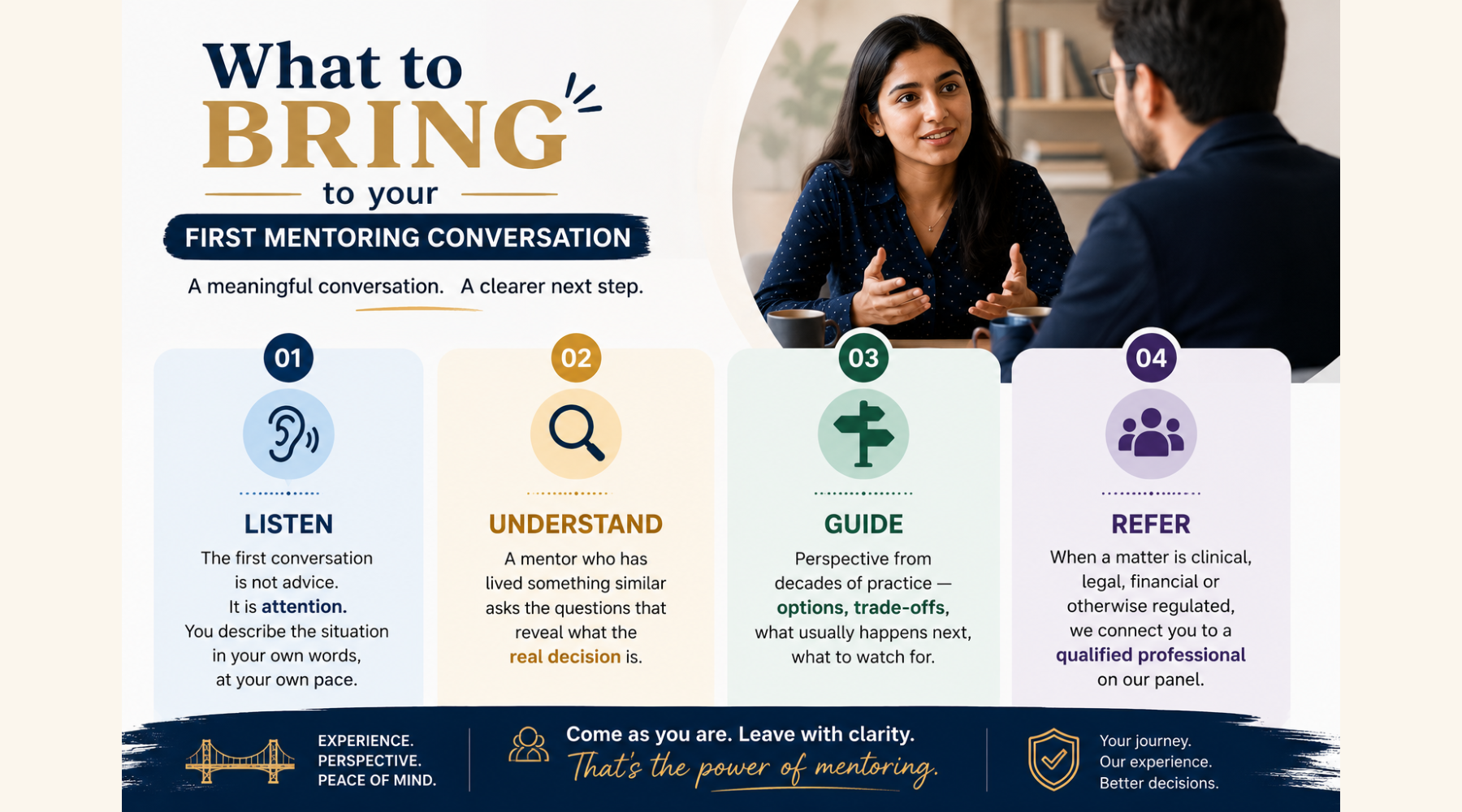
People often over-prepare for a first mentoring conversation and under-share the thing that actually keeps them up at night.
Bring three things. The situation as it stands, in plain words. The decision you are avoiding. And what you have already tried, including what did not work.
Your mentor will spend the first part of the conversation listening, not prescribing. Expect questions before suggestions — that is the point. By the end you should have options with trade-offs, and a clear sense of what to do in the next two weeks.
Everything you share stays confidential. If your situation needs a psychologist, lawyer, doctor or financial adviser, your mentor will say so and refer you to our Professional Panel rather than improvise.